Sri Lanka’s turquoise coast is a surfer’s playground, especially the legendary Arugam Bay. Whether you’re a seasoned rider or a first‑timer, knowing the price tag and how to line up a smooth trip makes all the difference. In 2026, the island offers a mix of budget camps, luxury retreats, and everything in between. Below is a practical, step‑by‑step guide that tells you how much you’ll spend, where to book, and how to make the most of every wave.
Quick answer: Arugam Bay, on the east coast, has surf from about May to September, sometimes into October. From November to April the waves are on the south and west coasts instead, around Weligama, Midigama, Ahangama, Mirissa, Hiriketiya and Hikkaduwa. A mid-range week in Arugam Bay costs roughly US$700, not counting flights. Board hire is about LKR 1,000–2,500 a day (US$3–8) and a beginner group lesson about LKR 5,000–9,000 (US$17–30). Every visitor needs an ETA from eta.gov.lk, and the drive from the airport takes 8–10 hours.
When and Where to Surf
Sri Lanka has two surf seasons on opposite coasts, so choose your base by the month you travel.
- East coast, about May to September/October: Arugam Bay and the points around it. Main Point, in front of the village, is a long right-hander over sand and rock for confident intermediates and above. Baby Point, just inside Main Point, and Elephant Rock are the gentlest spots for beginners. Whiskey Point and Pottuvil Point to the north and Peanut Farm to the south suit beginners on small days and improving surfers. July and August bring the biggest waves and the biggest crowds. From November to April the north-east monsoon brings rain and many places in the village close.
- South and west coasts, about November to April: Weligama’s sandy beach break is the classic place to learn. Ahangama, Midigama, Kabalana, Mirissa and Hiriketiya have a mix of reef, point and beach breaks, from gentle to advanced. Further west, Hikkaduwa’s breaks are mostly reefs best suited to intermediates. Weligama to Arugam Bay is about 5–6 hours by car.
What You'll Need
- Valid passport and an approved ETA from eta.gov.lk (free for 40 nationalities, about US$50 for most others)
- Mobile phone with data (Wi‑Fi works in camps)
- Comfortable board‑ready clothing, rash guard, and swimwear
- Sunblock (SPF 30+), reusable water bottle
- Small first‑aid kit (plasters, antiseptic for reef cuts) and reef booties for rocky entries
- Travel insurance covering water sports
- A sense of adventure and a willingness to learn
Step 1: Secure Your Flights
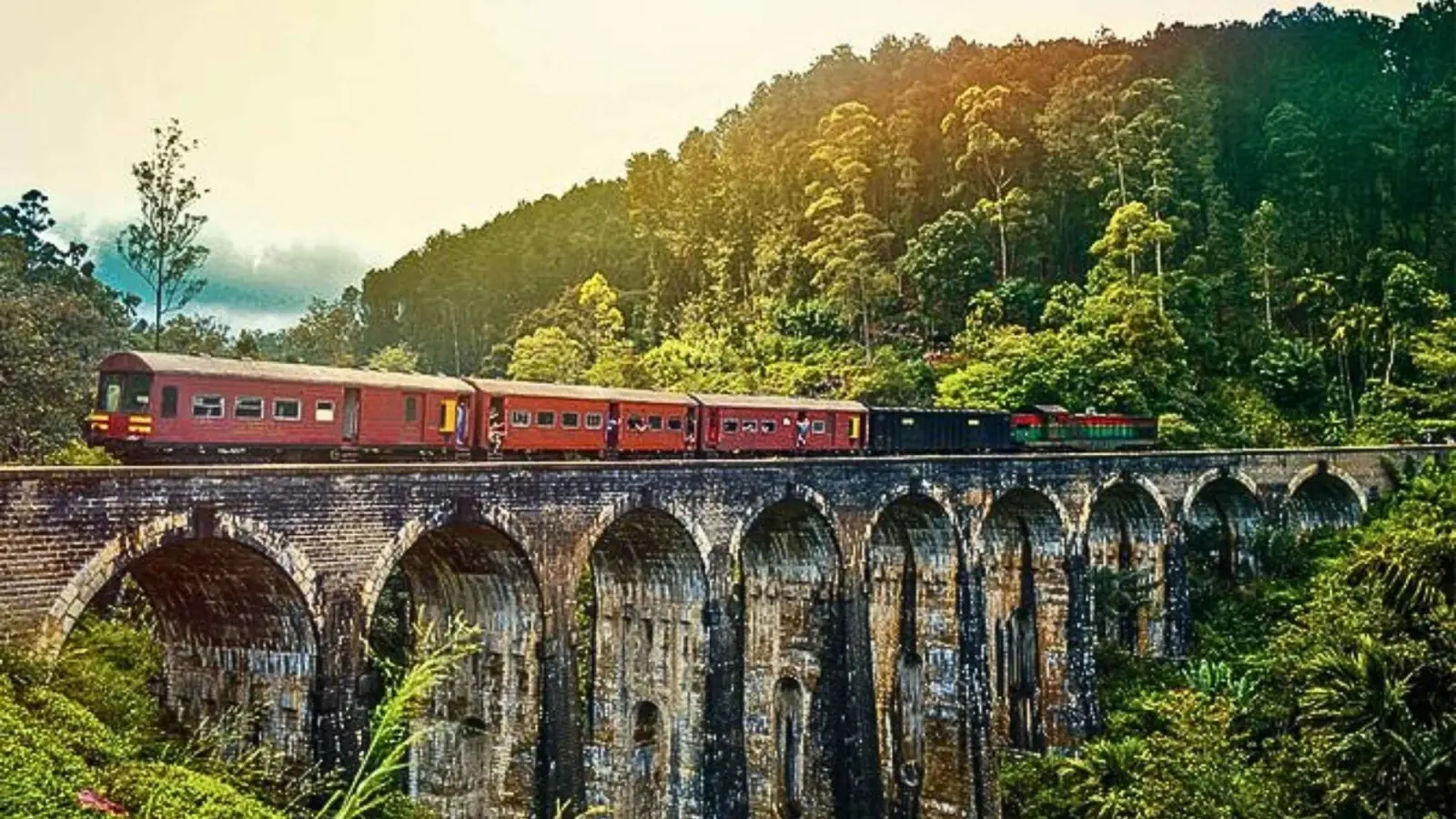
Return flights to Colombo’s Bandaranaike International Airport (CMB), at Katunayake about 35 km north of the city, cost very roughly US$500–1,200 from Europe. They often cost more from North America and less from elsewhere in Asia. SriLankan Airlines offers nonstop London‑Colombo flights; check current schedules as they change seasonally. Arugam Bay is on the far side of the island. A private car or van from the airport takes about 8–10 hours and costs roughly US$100–160. Public buses to Pottuvil, often with a change, take 10–12 hours. Many surfers break the trip in Ella or the hill country.
Step 2: Arrange Your Visa
Every visitor needs an Electronic Travel Authorization (ETA) before arrival, not only those staying longer. Apply on the official site, eta.gov.lk. It is free for 40 nationalities and costs about US$50 for most other passports. Avoid look-alike agent sites that add fees.
Step 3: Book a Surf Camp
Compare surf camps and guesthouses on TripAdvisor, Google Maps reviews or the camp’s own website. Check that instructors are ISA-certified (International Surfing Association) and that lessons include the board and tuk-tuk transport to the beginner spots. For July and August, book a few weeks ahead.
Step 4: Pick Your Board and Gear
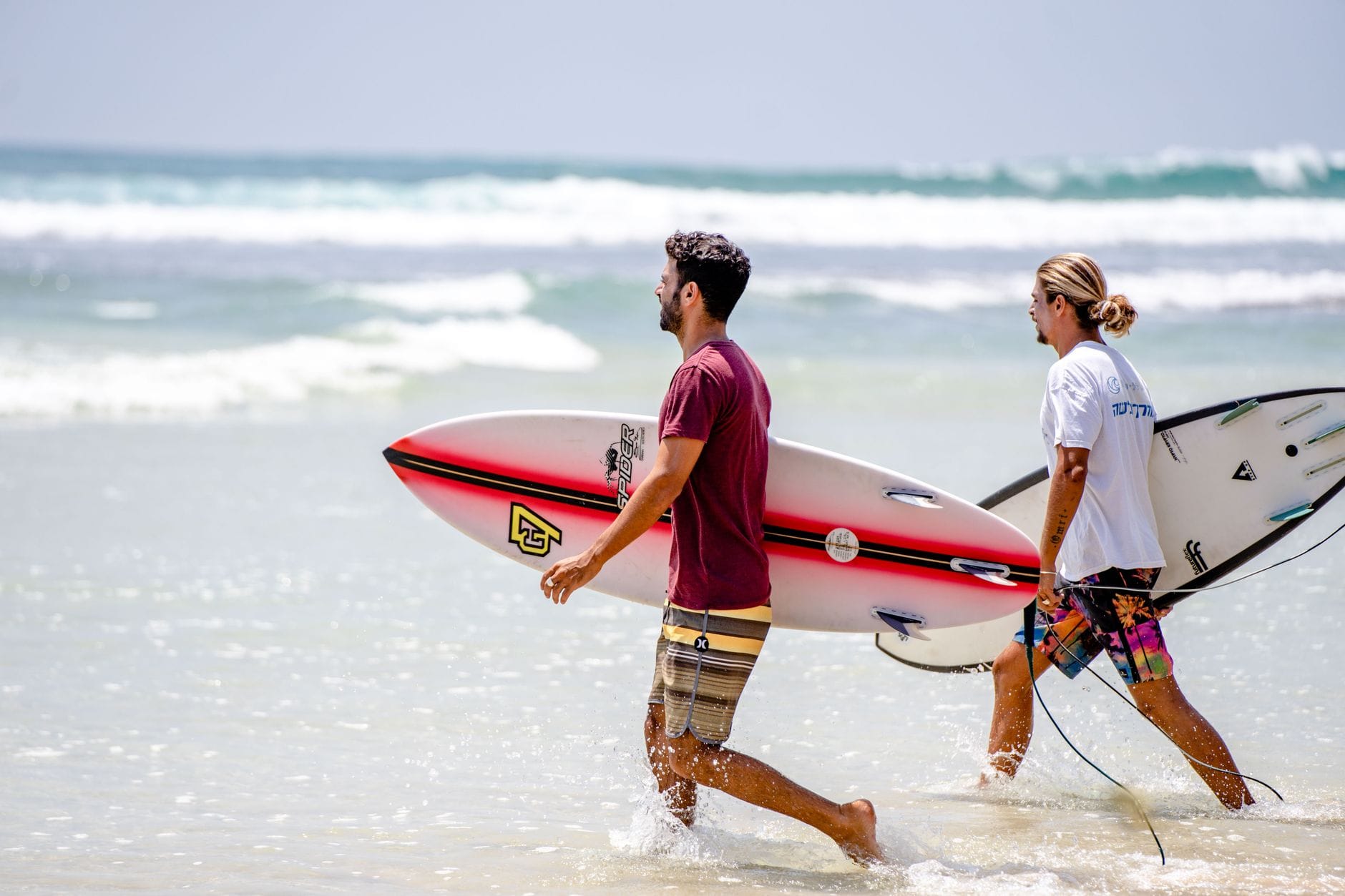
Board hire in Arugam Bay costs about LKR 1,000–2,500 a day (roughly US$3–8). Soft-tops are at the low end and hard boards at the top, and hourly rates and weekly discounts are common. Beginners should take a big soft-top (8 ft or longer). Rentals normally come with a leash, and tropical wax is sold in the surf shops. Check the board for dings and the leash for wear before you pay.
Step 5: Arrive and Settle In
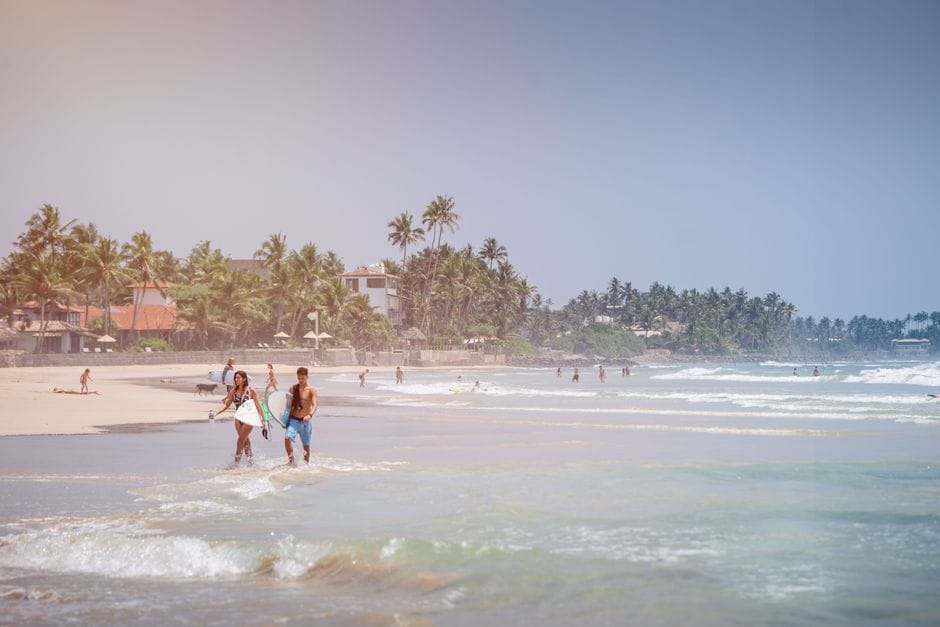
Check into your camp or guesthouse. Spend the first day acclimating: walk the beach, meet fellow surfers, and review safety rules. The water is around 27–29°C, so you need a rash guard and sunscreen, not a wetsuit. Main Point breaks over sand and rock, and several spots have shallow reef, rocks and sea urchins. Reef booties help, and ask locally about rip currents before you paddle out.
Step 6: Take Your First Lesson
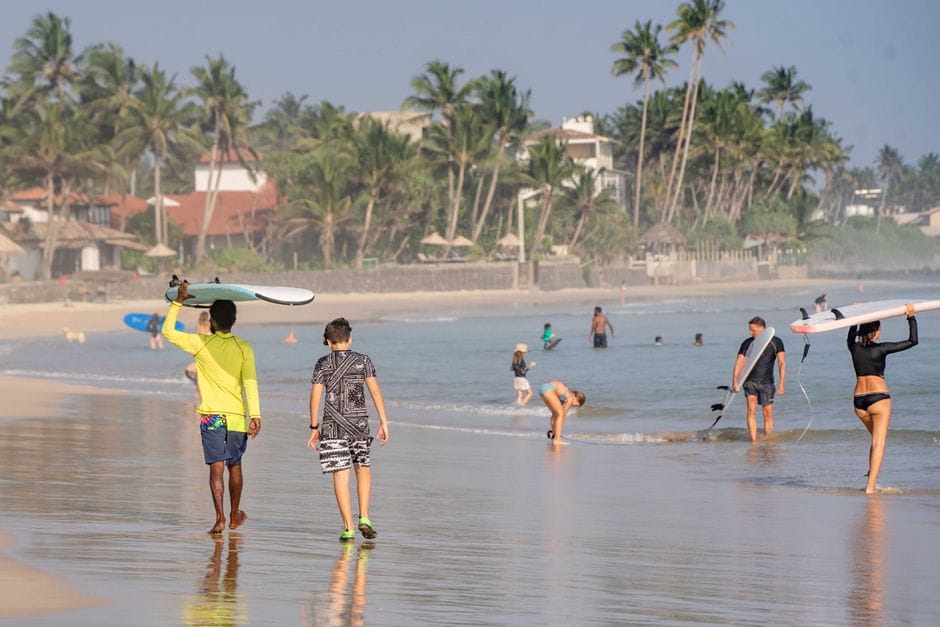
Book your first lesson through your camp or a surf school in the village. A beginner group lesson of about 1.5–2 hours costs roughly LKR 5,000–9,000 (US$17–30) including the board, and private lessons cost more. Ask whether tuk-tuk transport to the spot is included: Baby Point is in town, while Whiskey Point and Elephant Rock are 10–20 minutes away. Lessons cover safety, paddling, the pop-up and how to read waves.
Step 7: Explore Beyond the Waves
On flat days or in the afternoon, you can take a jeep safari in Kumana National Park (about 35–40 km south), or in Lahugala Kitulana National Park to see elephants. You can also climb to the Kudumbigala forest hermitage, see the Muhudu Maha Viharaya temple ruins at Pottuvil, or take a boat trip on Pottuvil Lagoon to spot crocodiles and birds. Watch the sunset from Elephant Rock.
Step 8: Manage Your Daily Budget
Daily costs:
- Breakfast: LKR 1,200 (US$4)
- Lunch/dinner: LKR 2,000–3,000 (US$7–10)
- Miscellaneous: LKR 1,000 (US$3)
- Room: varies widely, from about US$15 for a basic guesthouse room to US$100+ at resorts, with peak prices in July–August
- Tuk-tuk to surf spots: about LKR 1,000–3,000 return, depending on distance
- Bottled water: about LKR 120 per litre
Step 9: Pack Up and Depart
Before leaving, check the camp’s checkout policy. Allow a full day to get back across the island. The airport at Katunayake is 8–10 hours from Arugam Bay, so most people spend the last night near the airport or in Negombo before an early flight.
Pro Tips
- Go early: Surf at first light, before the onshore wind picks up later in the morning.
- Pack light: A single‑layer rash guard and a quick‑dry towel suffice.
- Stay hydrated: Carry a reusable bottle; refill at camp water points.
- Respect the reef and the lineup: Don’t stand on coral, and never drop in on a surfer already riding a wave; the surfer closest to the peak has priority.
- Learn a few words: Most people around Arugam Bay speak Tamil: “Vanakkam” is hello and “Nandri” is thank you. In Sinhala they are “Ayubowan” and “Istuti”.
- Get a local SIM: Dialog and SLT-Mobitel sell tourist SIMs with data in the airport arrivals hall; bring your passport.
- Check the tide chart: Each break works best at certain tides, so ask your instructor or check a forecast such as Surfline before heading out.
Common Mistakes to Avoid
- Skipping the ETA: Every visitor needs an approved ETA from eta.gov.lk, even when it is free for your nationality. Apply before you fly.
- Renting too small a board: Beginners learn fastest on a big, stable soft-top. Leave shortboards and the reef and point breaks until you can catch unbroken waves and turn.
- Going to the wrong coast: From November to April the east coast is off-season under the north-east monsoon and much of Arugam Bay closes. Surf the south and west coasts in those months, and come to Arugam Bay from May to September/October.
- Not tipping: Many hotels and restaurants add a 10% service charge. Beyond that, a tip of a few hundred rupees for your surf instructor or driver is appreciated.
FAQ
How much does a week in Arugam Bay cost?
Roughly US$700 on a mid-range budget, not counting flights. That covers a guesthouse or surf camp, food, board hire and a few lessons. Budget travellers in basic rooms eating local food spend much less, and prices rise in July and August.
Are surf lessons included in most camps?
Many camps bundle lessons into the package, but check the details.
Can I bring my own board?
Yes. Airlines carry surfboards as sports equipment, usually for an extra fee, so check your airline’s rules before booking. A personal board you bring and take home again is normally treated as personal baggage. Carrying a board bag across the island by tuk-tuk and bus is awkward, so many visitors rent locally instead.
What currency should I use on the island?
Cash in LKR is king. Card payments are accepted in most camps and tourist spots, but small vendors rely on cash.
Is it safe for beginners?
Yes, if you choose the right spot and surf with an instructor. Beginners usually start at Baby Point or Elephant Rock, and on small days at Whiskey Point or Peanut Farm. Main Point is for confident intermediates and above. The water is warm, so a rash guard is enough. Watch out for rocks, sea urchins and rip currents.
Do I need travel insurance?
Yes, especially one that covers water sports. Look for policies that include medical evacuation and gear protection.
How long does a typical surf lesson last?
Most beginner lessons last about 1.5–2 hours, and some schools offer 1¼- or 2½-hour sessions. There is a short beach briefing on safety, paddling and the pop-up, then most of the time is spent in the water with the instructor helping you catch waves.
Final Thoughts
Surfing in Sri Lanka blends affordable adventure with vibrant culture. With careful planning—choosing the right coast for your dates, booking flights, securing a surf camp, budgeting for gear, and respecting local customs—you’ll ride the waves of Arugam Bay and create memories that last a lifetime. Pack your board, bring your enthusiasm, and let the island’s turquoise surf welcome you home.